
.jpg)
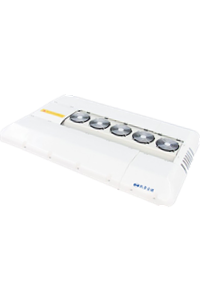
|
Core Components of Transport Refrigeration Units in Cold Chain Logistics:Structural Characteristics, Thermodynamic Foundations, and Technical Considerations |
|
| Abstract
With the rapid development of global trade, cold chain transportation has become a critical infrastructure ensuring the safety and quality of temperature-sensitive goods. The performance of transport refrigeration units (TRUs) is fundamentally determined by the thermodynamic efficiency of the vapor compression cycle and the structural reliability of core components. This paper integrates thermodynamic modeling with structural analysis to examine compressors, heat exchangers, expansion devices, and intelligent control systems. By embedding energy balance equations and heat transfer theory within component-level discussions, the study provides a systematic engineering interpretation of performance optimization in modern transport refrigeration systems. |
|
| 1. Introduction Transport refrigeration units operate under highly transient environmental conditions, including fluctuating ambient temperatures, solar radiation, cargo heat release, air infiltration, and continuous mechanical vibration. The total refrigeration load under mobile conditions can be expressed as:
Qtotal=Qtransmission+Qinfiltration+Qproduct+Qsolar
Where the conductive heat gain through insulated walls is:
Qtransmission=UA(Tout−Tin)
Here, U is the overall heat transfer coefficient of the vehicle body, A is the effective surface area, and Tout−Tin represents the temperature difference between ambient and cargo space.
The refrigeration system must dynamically respond to variations in Qtotal, making component efficiency and adaptive control central to system stability.
|
|
| 2. Thermodynamic Foundation of the Refrigeration Cycle The vapor compression cycle forms the operational backbone of transport refrigeration systems. Under steady-state assumptions, the cooling capacity provided by the evaporator is determined by:
Qe=m˙(h1−h4)
where m˙ denotes refrigerant mass flow rate and h1−h4 represents the enthalpy difference across the evaporator.
The compressor power requirement is:
Wc=m˙(h2−h1)
Thus, system efficiency is quantified by the coefficient of performance (COP):
COP=Qe/Wc
In transport refrigeration applications, maintaining a high COP under partial-load operation is essential. Since load varies continuously during transport, fixed-speed compressors often operate away from optimal conditions, leading to efficiency losses.
.png) |
|
| 3. Compressor: Power Core and Efficiency Determinant The compressor is responsible for maintaining refrigerant circulation and sustaining the pressure differential required for phase change.
In real systems, compression is not perfectly isentropic. The isentropic efficiency is defined as:
ηs=h2s−h1/h2−h1
where h2 s represents the enthalpy after ideal isentropic compression.
Higher isentropic efficiency directly reduces compressor work Wc, thereby improving COP. Modern inverter-driven compressors dynamically adjust rotational speed to regulate refrigerant mass flow rate m˙. Since both cooling capacity Qe and power input Wc are proportional to m˙, variable-speed control enables real-time balancing between load demand and energy consumption.
Additionally, transport compressors require enhanced anti-vibration structures due to mechanical stresses from vehicle motion. Mechanical stability ensures that thermodynamic efficiency is not compromised by structural fatigue or internal leakage.
.png) |
|
| 4. Condenser and Evaporator: Heat Transfer Optimization The condenser and evaporator determine the system’s thermal exchange capability.
Heat transfer performance in both components follows:
Q=UAΔTlm
Where ΔTlm is the log mean temperature difference.
.png) 4.1 Condenser
In transport systems exposed to high ambient temperatures, condenser efficiency directly affects discharge pressure and compressor workload. An increase in condensing temperature raises h2, thereby increasing compressor power Wc and reducing COP.
Microchannel condensers enhance the overall heat transfer coefficient U while reducing refrigerant charge volume. Improved heat dissipation lowers condensing pressure, stabilizing system operation in hot climates.
4.2 Evaporator and Frost Influence
Within the cargo compartment, evaporator performance determines cooling uniformity. However, frost formation introduces additional thermal resistance:
Ueff=1/1hr+Rf+1ha
where Rf represents frost thermal resistance.
As Rf increases, effective heat transfer coefficient Ueff decreases, leading to reduced cooling capacity Qe. Intelligent defrost strategies minimize frost accumulation and maintain stable thermal exchange.
Optimized airflow design further ensures uniform temperature distribution, reducing localized thermal deviations that could compromise cargo quality.
|
|
| 5. Expansion Device: Flow Regulation and Stability The expansion device regulates refrigerant mass flow rate m˙, directly influencing both Qe and Wc.
Electronic expansion valves (EEVs) enable rapid adjustments based on superheat measurements, ensuring optimal evaporator utilization while preventing liquid refrigerant return (liquid slugging). By stabilizing superheat, EEVs help maintain compressor safety and improve overall cycle efficiency.
Dynamic flow control is particularly important under transport conditions, where rapid load changes require immediate response to avoid temperature fluctuations.
|
|
| 6. Intelligent Control and Adaptive Optimization Modern TRUs incorporate IoT-enabled monitoring and predictive control systems. By continuously measuring pressure, temperature, and electrical parameters, control algorithms estimate real-time cooling load and adjust compressor frequency and valve position accordingly.
Since:
Qe=m˙(h1−h4)
precise control of m˙ becomes the central lever for adaptive optimization. Advanced algorithms seek to maximize COP while ensuring temperature precision within narrow tolerances (often ±0.1°C for pharmaceutical transport).
|
|
| 7. Conclusion The performance of transport refrigeration units is fundamentally governed by thermodynamic efficiency and structural reliability. By integrating compressor isentropic efficiency, heat exchanger performance equations, dynamic load modeling, and intelligent flow regulation, modern TRUs achieve improved energy efficiency and temperature stability under mobile operating conditions.
Advancements in variable-frequency compression, microchannel heat exchange technology, electronic expansion valves, and intelligent control systems collectively redefine performance boundaries in cold chain transport.
|
|
| References ASHRAE. (2021). ASHRAE Handbook—Refrigeration. American Society of Heating, Refrigerating and Air-Conditioning Engineers. Cengel, Y. A., & Boles, M. A. (2019). Thermodynamics: An Engineering Approach (9th ed.). McGraw-Hill Education. Dossat, R. J., & Horan, T. J. (2001). Principles of Refrigeration (5th ed.). Prentice Hall. Tassou, S. A., De-Lille, G., & Ge, Y. T. (2009). Food transport refrigeration – Approaches to reduce energy consumption and environmental impacts of road transport. Applied Thermal Engineering, 29(8–9), 1467–1477. United Nations Environment Programme (UNEP). (2022). Cold Chain Development for Sustainable Growth. UNEP Report. |
|
