
.jpg)
Extreme-climate cold chain validation: 5% faster pull-down · 42% TCO saving · 50-unit repeat order
+3%
Refrigeration Efficiency
vs. previous equipment
+5%
Pull-down Speed
40°C+ to below 0°C
0
Failures
12 months · 30 units >100k hrs
-42%
Annual TCO
vs. European brand
50 units
Follow-on Order
Second batch placed
Baku Cold Chain · Extreme Challenges
Located on the western shore of the Caspian Sea, Baku experiences a rare combination of high heat and humidity during summer: ambient temperature 42–45°C, relative humidity exceeding 80%. This imposes severe demands on refrigeration units: the truck body must cool from ambient (40°C+) to below 0°C within 30 minutes, otherwise fresh produce spoilage escalates rapidly. Previously, conventional units experienced 1–2 failures per month, with each incident causing $2,000–5,000 in cargo loss.
Previous pain points: European and Korean brands showed pull-down speed 15–20% slower than specs; compressor overload led to 30% higher failure rate on hot days; purchase price was 25–35% higher than SuperSnow KX-450.
SuperSnow KX-450 · Key Specs & Measured Breakthroughs
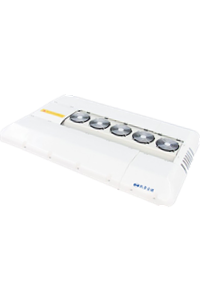
Designed for 16–20m³ light-duty refrigerated vans with QP16 compressor, core parameters:
| Parameter | Value |
|---|---|
| Applicable volume | 16–20 m³ |
| Evaporator air flow | 1830 m³/h |
| Cooling capacity (-4°F) | 8360 Btu/hr |
| Cooling capacity (+32°F) | 16205 Btu/hr |
| Compressor model | QP16 |
| Ingress protection (key parts) | IP67 |
Real-World Measured Data in Baku
5% Faster Pull-down
Same load & start temp: reduced from 38 to 36 minutes vs. previous units.
3% Refrigeration Efficiency Gain
Comprehensive index based on 12-month energy consumption & temperature stability.
Superior Humid Performance
At 85% RH, pull-down time only 7% longer than dry conditions; benchmark brand increased 22%.
30 Units · 12 Months Zero-Failure Report
After installing the first 30 KX-450 units, the customer recorded 12 consecutive months of real-world operations, with cumulative runtime exceeding 109,500 hours. Key metrics:
| Metric | Data |
|---|---|
| Operation period | 12 months (avg. 10 hours/day) |
| Total runtime (30 units) | ≈109,500 hours |
| Failures | 0 |
| Refrigeration efficiency gain | +3% (vs. old equipment) |
| Pull-down speed gain | +5% |
| Energy saving vs. European brand | ≈1.2 kWh saved per trip |
| Follow-on order | Second batch of 50 units placed |
“Zero failures” validates extreme durability: No unscheduled downtime for 30 units during Baku summer at 45°C / >80% RH.
Total Cost of Ownership (TCO) vs. European Brand · 42% Annual Saving
Based on actual data of 3,000 operating hours per year per unit, compared to the previously used European brand:
| Cost item | European brand | SuperSnow KX-450 | Saving (USD / %) |
|---|---|---|---|
| Purchase cost | 100% baseline | -28% | ~$2,800/unit |
| Annual maintenance | $1,200 | $180 | $1,020 saved |
| Annual energy cost | $1,800 | $1,560 | $240 saved |
| Cargo spoilage rate | 1.8% | 0.9% | Reduced by half |
| Total annual TCO | ~$3,000+ | ~$1,740 | ~42% saving |
Lower life-cycle cost combined with exceptional reliability enables each KX-450 to deliver significant ROI within 12 months.
Market Competitiveness Soars · Data-Backed Results
On-Time Delivery Rate
92% → 98.5%
Dramatically improved cold chain punctuality
Dramatically improved cold chain punctuality
Customer Complaint Rate
Cold chain complaints dropped by 65%
Boosted end-user trust
Boosted end-user trust
Local Market Share
Gained 5 percentage points in Baku refrigerated truck market
Becoming the regional reference solution
Becoming the regional reference solution
Key Conclusions: Durability, Efficiency & Cost-Effectiveness in Extreme Climate
3% higher refrigeration efficiency
5% faster pull-down
Zero failures over 12 months
42% lower TCO
50-unit repeat order
In Baku’s typical hot and humid environment (45°C / 80%+ RH), 30 SuperSnow KX-450 units with over 100,000 cumulative operating hours have proven not only performance superiority but also redefined reliability benchmarks for cold chain refrigeration with a zero-failure record. By switching to KX-450, the refrigerated truck manufacturer saves tens of thousands of dollars annually in operating costs while increasing regional market share — a benchmark case for cold chain logistics in the Caspian region.
